


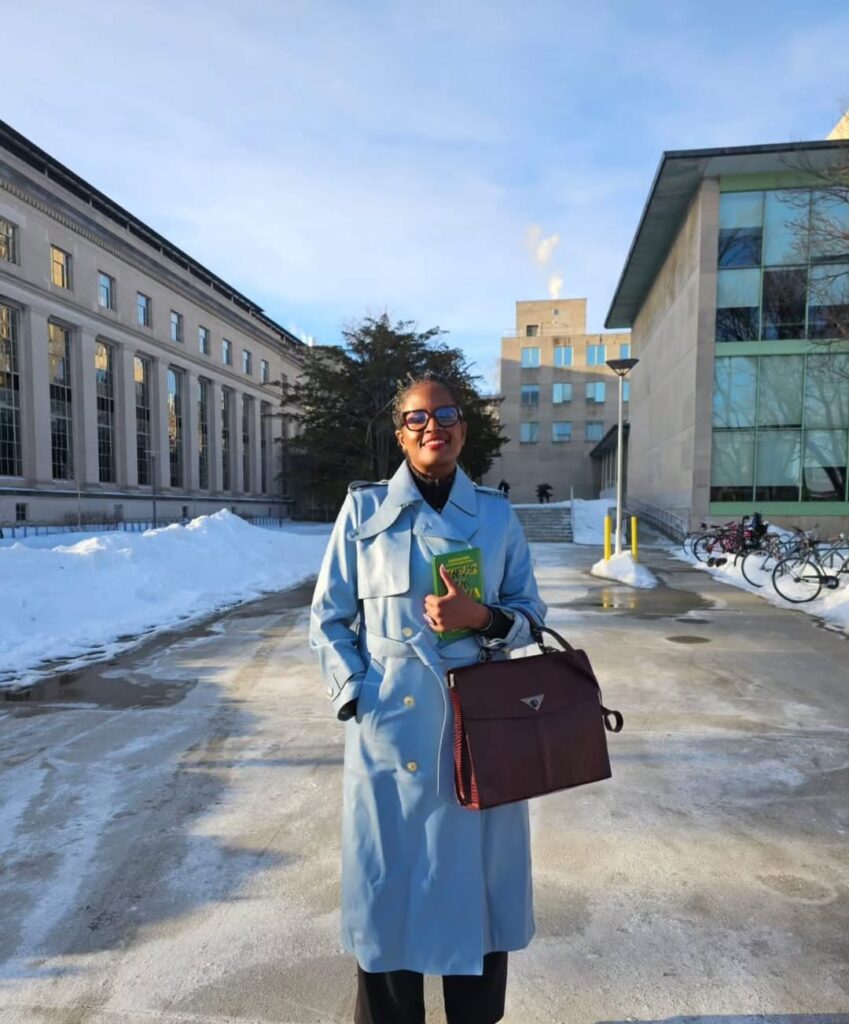
Djamila Ribeiro makes her debut as a lecturer at MIT on Iemanjá Day
February 4, 2026




On February 2, a date when different Afro-descendant traditions celebrate Iemanjá, Djamila Ribeiro taught her first class as a visiting professor in the Dr. Martin Luther King Jr. Visiting Professors and Scholars Program at the Massachusetts Institute of Technology (MIT). In a post shared on social media, the philosopher summed up the moment: “Professor Djamila is in the house!”.
Djamila’s arrival in the program—created to bring leading scholars to campus and broaden the diversity of perspectives in the institute’s intellectual life—also marks something symbolic: at one of the most influential universities in the world, a course centered on intellectual production developed in Brazil and on Global South feminisms is now part of the conversation.
A program that honors Martin Luther King Jr. and invests in “new perspectives”
The program that welcomes Djamila was established in the early 1990s and, according to MIT’s own description, aims to attract people whose trajectories align with the idea of “trailblazers” (pioneers) in human, academic, and political freedom, in reference to the legacy of Martin Luther King Jr..
In practice, it is an initiative that combines teaching, academic exchange, and network-building—and every year it hosts a group of visitors from different fields.
What Djamila brought into the classroom
In her published account, the Brazilian philosopher highlighted two focal points of the course content: intellectual production developed in Brazil and feminist formulations from the Global South, with the goal of offering MIT students interpretive tools for debates that often reach universities in the Global North already filtered through European and U.S. canons.
“It’s an immense joy to teach about the intellectual productions developed in Brazil and also feminists about Global South feminists,” Djamila wrote, linking the act of teaching to a wager on the future: “I love teaching and knowing that these productions will impact the academic journey of young people at MIT.”
When a classroom at a globally recognized institution opens to Brazilian bibliographies and intellectual traditions, it is not only about “including women authors.” It is about disputing what counts as a legitimate reference, which questions gain “universal” status, and which experiences have historically been pushed into footnotes. And that point is central.
As Djamila emphasizes, everyone speaks from a social location, but not all voices are heard in the same way, and not all discourses are recognized as knowledge. Teaching at MIT, in this sense, is not merely an individual achievement. It makes visible how debates about knowledge production are shaped by power, legitimacy, and structure.
When Black Brazilian bibliographies enter international curricula, they do more than “represent.” They help name structure, method, and history—and they shift the center of the conversation.
The intimate dimension of a public milestone
In the same post, Djamila noted the importance of her daughter’s presence: “And what a joy to have Thulane by my side in this moment!” The mention is a reminder that academic and political trajectories are not built only through calls for applications and titles. They are sustained through networks of care, family, territory, and ancestry.

By weaving her debut as an MLK visiting professor into a day dedicated to celebrating Iemanjá, Djamila also places the moment beyond university protocol. She inscribes the scene in a grammar of belonging, memory, and spirituality—often delegitimized when knowledge is reduced to what fits within the Eurocentric mold of academia.
“Axé, Odoya!”, Djamila concluded.
Ver essa foto no Instagram
Content translated using artificial intelligence
Related articles

The Voice and the Legacy: Djamila Ribeiro reflects on Martin Luther King Jr.’s “struggle for peace”
Djamila Ribeiro brings Global South feminism to Italian magazine L’Espresso

Thulane admitted to the University of São Paulo