


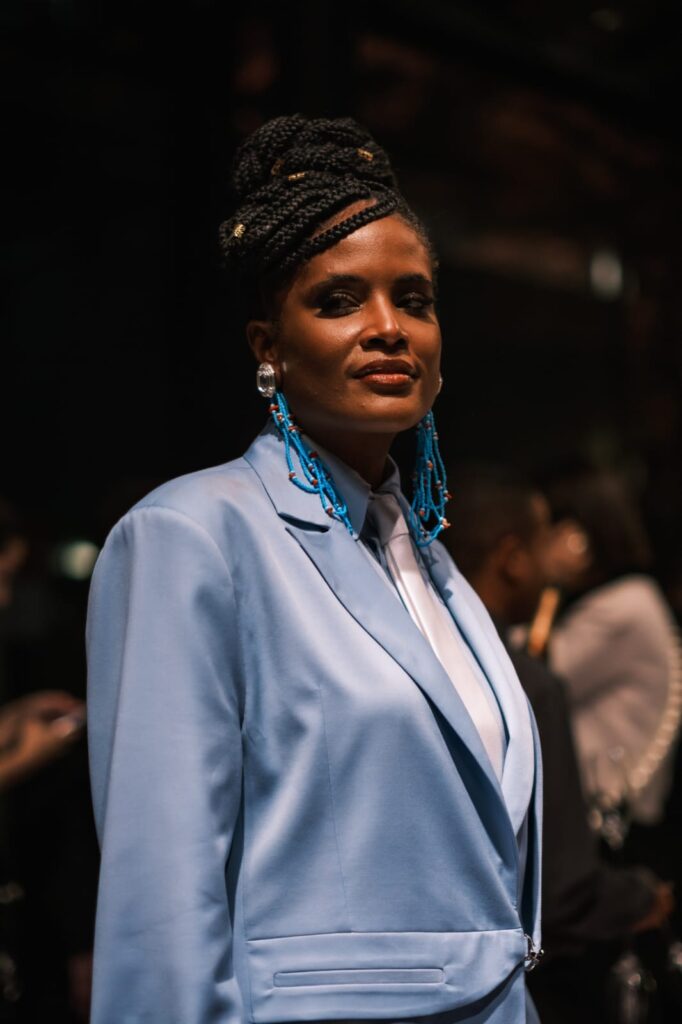
São Paulo court orders member of a far-right group to pay damages to Djamila Ribeiro over online insults
February 6, 2026




Djamila Ribeiro won an important court victory: last Wednesday, the 4th, the São Paulo Court of Justice (Tribunal de Justiça de São Paulo, TJSP), partially granting an appeal, found that a post by Renan Antonio Ferreira Santos on X (formerly Twitter) went beyond legitimate public debate and violated personal rights, setting R$ 30,000 in compensation for moral damages.
In a decision written by appellate judge Lucilia Alcione Prata, the court also ordered the removal of the content, a public retraction, and an obligation to refrain from further posts that repeat or allude to the same attack, under penalty of a fine.
The ruling can still be appealed—and Djamila, while celebrating the outcome, made a point of stating that publicly. Even so, the judgment already establishes a symbolic and legal benchmark: the court states plainly that freedom of expression does not authorize personal disqualification, defamation, or stigmatization—especially when the attack relies on racial and gender stereotypes amplified by the digital environment.
What prompted the lawsuit
The case concerns a post attributed to the defendant—whose authorship, according to the decision itself, is undisputed—in which Djamila is called a “jeca” and linked to an alleged “agenda” aligned with “organized crime.”
The TJSP framed the issue directly: it was not about ideological disagreement, but whether the post crossed constitutional limits on criticism and became an attack on honor, image, and reputation.
“Jeca” is not neutral: the decision treats the insult as a mechanism of belittlement
One of the most striking parts of the ruling is its reading of the term “jeca.” The court rejects the idea that it is a harmless word or mere irony. On the contrary:
“The expression ‘jeca,’ far from being semantically neutral, carries a strong symbolic and pejorative charge. In the Brazilian social imagination, it evokes the character ‘Jeca Tatu,’ described in Monteiro Lobato’s work as a mixed-race (‘caboclo’) figure associated with backwardness, ignorance, and social marginalization, portrayed as lazy and indolent. Its use, in the context of the post, aims to reduce and belittle the plaintiff by comparing her to the ‘JECA’ and diminishing her intellectual and social capacity. When directed at a Black woman—an intellectual, writer, and a leading reference in the anti-racist struggle—the language used reinforces structural stigmas, reproducing delegitimizing mechanisms historically employed to silence female and Black voices in the public sphere.”
The court also treats as even more serious the claim that “her agenda is the same as organized crime,” finding that it goes beyond opinion and suggests ethical and political alignment with criminal practices—potentially damaging reputation and misleading the public.
Race and gender perspective: CNJ guidance in the reasoning
The opinion notes that the analysis “requires” a race- and gender-sensitive approach, citing Resolution No. 492/2023 and Resolution No. 598/2024 issued by Brazil’s National Council of Justice (Conselho Nacional de Justiça, CNJ)—the body that oversees administrative and policy guidelines for the Brazilian judiciary. These resolutions instruct courts to recognize discriminatory stereotypes and discursive practices even when disguised as “formal neutrality.”
The court recognizes that certain forms of speech produce disproportionate harm to Black women, especially when they operate through belittlement and symbolic criminalization. It also notes that the internet amplifies the damage, treating the digital environment as an accelerator of violence that spreads offenses and triggers third-party attacks.
The judge further notes that the post generated subsequent comments containing racist and misogynistic attacks, reinforcing the argument that social networks increase the harmful potential of such content.
Compensation, retraction, and removal: what the TJSP ordered
In the operative part of the ruling, the court set R$ 30,000.00 in moral damages, noting monetary adjustment from the date of publication of the decision and interest from the harmful act (the post).
Beyond the amount, it ordered: removal of the offensive post; an explicit retraction on the defendant’s X profile regarding the message that called Djamila “stupid,” “jeca,” and linked her to “organized crime”; and an obligation to refrain from new posts that repeat or allude to the same content, with a fine per publication.
Djamila said that once the decision becomes final and payment is made, the money will go to the Instituto Feminismos Plurais (Feminismos Plurais Institute), which supports women in situations of social vulnerability. The victory does not end the struggle. But it leaves a record: honor is not vanity—it is a condition of citizenship.
“Today, I will go to sleep happy. Today, a Black woman had her voice respected by the justice system. My name is Djamila Ribeiro and, for my mother, for my grandmother, and for all the women who are disrespected every day in this country, I claim my right and my honor,” Djamila wrote on Instagram. See:
Ver essa foto no Instagram
Ver essa foto no Instagram
Photo: Breno Melo
Content translated using AI
Related articles
Djamila Ribeiro makes her debut as a lecturer at MIT on Iemanjá Day

The Voice and the Legacy: Djamila Ribeiro reflects on Martin Luther King Jr.’s “struggle for peace”
Djamila Ribeiro brings Global South feminism to Italian magazine L’Espresso