


Black Consciousness: Where Toni Morrison Meets Carolina Maria de Jesus
November 24, 2025






*Content translated with artificial intelligence*
How Djamila Ribeiro Turns Her Education into a Public Legacy
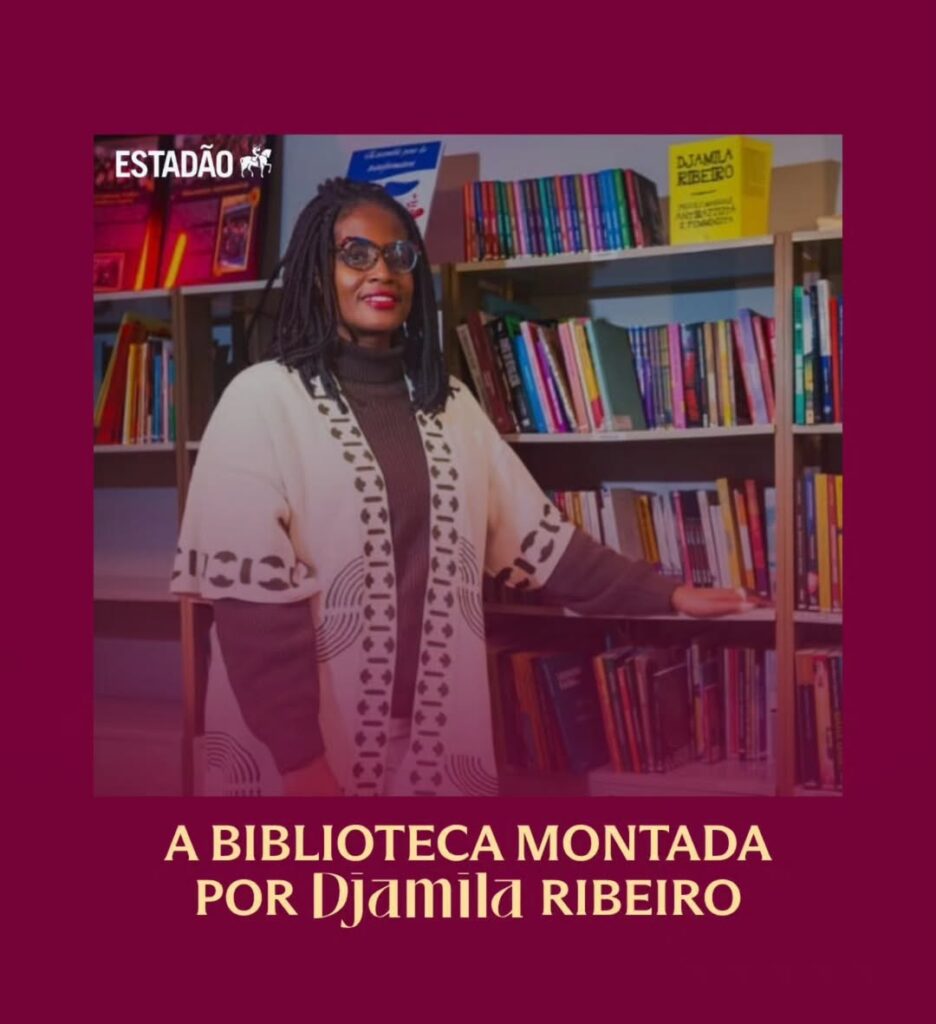
On Chibarás Avenue, in the Moema neighborhood of São Paulo, there is a space where geography dissolves into bookshelves. There, African American author Toni Morrison — the first Black woman to win the Nobel Prize — “converses” with Brazilian writer Carolina Maria de Jesus. The library is more than a collection; it’s a deliberate gathering of knowledge systems long kept at the margins of literary canons. At the Instituto Feminismos Plurais, led by Djamila Ribeiro, this curatorship is not decorative — it’s a tool for building the future by connecting past and present.
From Reader in Santos to Founder in São Paulo
The existence of the Toni Morrison Library is, above all, an act of historical retribution. Decades before becoming a best-selling author and visiting professor at MIT, Djamila Ribeiro had her worldview shaped in a library — the one at Casa de Cultura da Mulher Negra in Santos, named after Carolina Maria de Jesus. It was there that the Brazilian philosopher encountered the words that helped her make sense of her own reality.
“She’s an author I discovered in late adolescence. I worked at an organization called Casa de Cultura da Mulher Negra in Santos. Even though I came from a background of activism — my father was an activist — I didn’t know Carolina. I only discovered her because that organization had a library named after her,” Djamila revealed in an interview with O Estado de S. Paulo on November 20.
Today, the cycle comes full circle. By keeping the doors of her own library open in São Paulo, Djamila transforms her individual journey into collective infrastructure. The space was designed to offer what is often denied to much of Brazil’s Black and peripheral population: not just access to books, but the right to silence, internet access, and a welcoming roof for those who wish to study all day.
“Thinking about antiracist actions necessarily involves creating spaces where knowledge can be shared. That’s how we understand this initiative — but also as a space of care: for many people, depending on their social position, a quiet place to study is fundamental,” she wrote in an Instagram post on Black Consciousness Day, November 21.
The Curatorship: An Intellectual Lineage
The selection of works reflects what Djamila calls essential references. Visitors will find the piercing poetry of Audre Lorde, the sensibility of Conceição Evaristo, and the philosophy of bell hooks and Simone de Beauvoir. The collection materializes the bridge that the now MIT professor builds in her career: connecting Brazilian critical thought with the world — as seen in her intellectual exchange and friendship with Nigerian author Chimamanda Ngozi Adichie.
A Space for Belonging
More than a place of transit, the library is an invitation to stay. With a book club (“Women Who Write”), computers, and free internet access, the space reinforces the mission of Espaço Feminismos Plurais to democratize reading. While Djamila takes Brazilian thought beyond national borders, the Toni Morrison Library ensures that in São Paulo, the legacy of these women remains accessible, alive, and — above all — open.
Related articles

Djamila Ribeiro Teaches Her First Class at MIT


Djamila Ribeiro Celebrates Consolidated Status as Key Reference for Brazil’s National Exam (Enem) Essays

Djamila Ribeiro’s Book Featured in Dua Lipa’s Book Club