


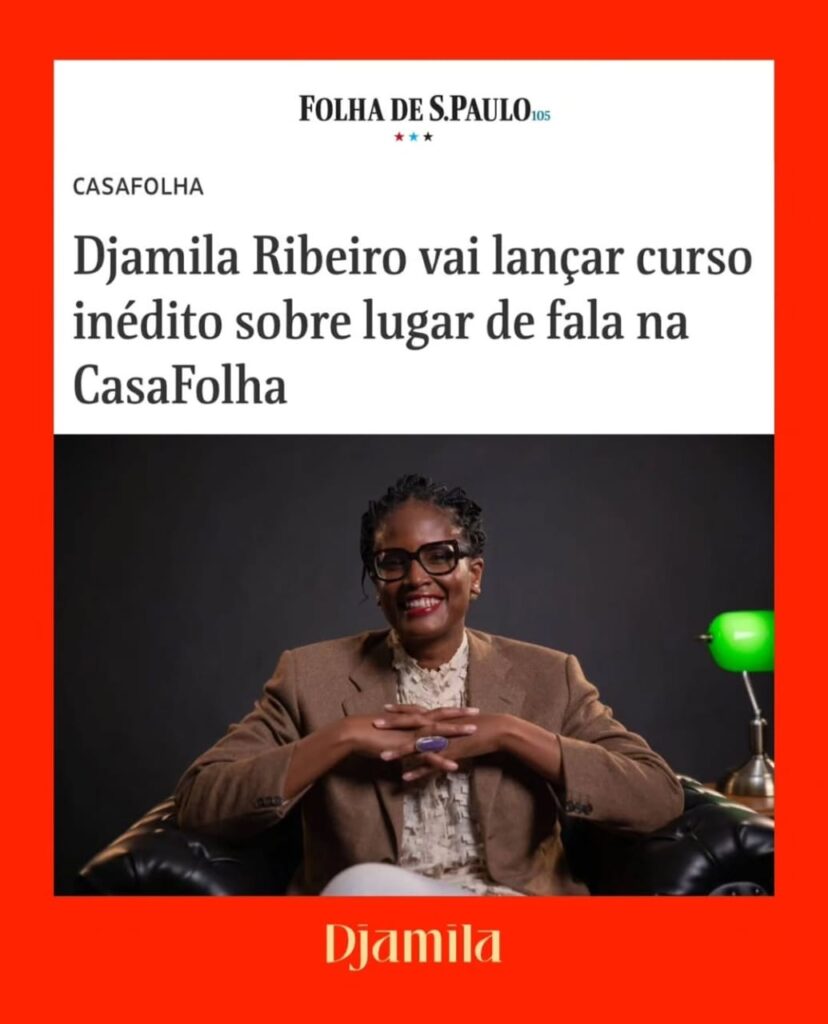
Djamila Ribeiro Launches New CasaFolha Course on Lugar de Fala
July 23, 2026




Available beginning July 30 at casafolhasp.com.br, the classes revisit the concept’s origins, address common misinterpretations, and draw on the work of thinkers such as Lélia Gonzalez, Angela Davis, bell hooks, and Grada Kilomba
Djamila Ribeiro will launch a first-of-its-kind course on lugar de fala (speaking position) at CasaFolha on July 30. Available exclusively to platform subscribers, the course opens with a question that has followed Ribeiro’s work since the concept gained prominence in Brazil: How can lugar de fala reclaim its political dimension when it is so often reduced to an individual license to speak — or to stay silent?
Ribeiro says one of the course’s main goals is to provide “an explanation of what lugar de fala means, since it is a concept that has been widely misinterpreted.”
The course traces the origins of the idea, examines how it is used in public debate, and pushes back against readings that have turned a discussion about power, inequality, and legitimacy into a simplistic dispute over who gets to talk about what.
The course arrives alongside a revised and expanded edition of Lugar de Fala (Speaking Position), published by Rosa dos Tempos, an imprint of Grupo Record.
Originally published in 2017, the book helped bring wider attention in Brazil to a debate shaped by Black intellectuals, feminists, and decolonial thinkers.
“Lugar de fala does not mean that only Black people can discuss racism. The concept is based on the understanding that everyone speaks from a particular social position,” Ribeiro says.
The point, then, is not to keep anyone from speaking. It is to understand where perspectives come from, which social experiences shape them, and why some voices are granted more legitimacy than others.
In the book, lugar de fala is neither a synonym for individual experience nor a guarantee that someone will develop a critical awareness of the position they occupy.
The concept examines the social position shared by groups — and the conditions that allow some people to be heard while others face barriers to participating in knowledge production, political institutions, and decision-making spaces.
The course will also address identity, identity politics, and intersectionality. To develop these topics, Ribeiro engages with authors from different regions and intellectual traditions, including Lélia Gonzalez, Angela Davis, bell hooks, Sueli Carneiro, Grada Kilomba, and Simone de Beauvoir.
That range of references reflects a principle present since the book’s first edition: Challenging the idea of a universal point of view requires amplifying perspectives that have historically been dismissed.
The expanded edition reflects this intellectual journey.
“The book is now four times longer and includes updated data, new intellectual references, and research conducted during my time teaching at PUC-SP, New York University, and MIT. It also features a foreword by Chimamanda Ngozi Adichie and an introduction by Grada Kilomba,” Ribeiro explains.
A writer with a master’s degree in political philosophy from the Federal University of São Paulo (Unifesp), Ribeiro edits the Feminismos Plurais (Plural Feminisms) series and has published texts and books by more than 80 Black authors. Her editorial work is part of a broader effort to expand access to the intellectual production of historically marginalized groups — recognizing them as political subjects and producers of knowledge, not merely as objects of study.
In a post about the new course, Ribeiro described the classes as a companion to the expanded edition, offering a deeper exploration of the concepts, contexts, and debates essential to understanding the book.
The book and the course are part of the same effort: to restore the complexity of a discussion too often reduced to sound bites and social media disputes.
CasaFolha currently offers 38 on-demand courses taught by prominent figures from a range of fields. A platform subscription is required to access Ribeiro’s classes and the rest of the catalog. Folha subscribers can add the service to their existing plan for an additional R$10 (about US$2) at casafolhasp.com.br/upgrade.
“If you would like to expand your reading of the book and explore this discussion in greater depth, this is a great opportunity. See you there!” Ribeiro says.
Translated by AI
Ver essa foto no Instagram
Ver essa foto no Instagram
Ver essa foto no Instagram
Ver essa foto no Instagram
Related articles
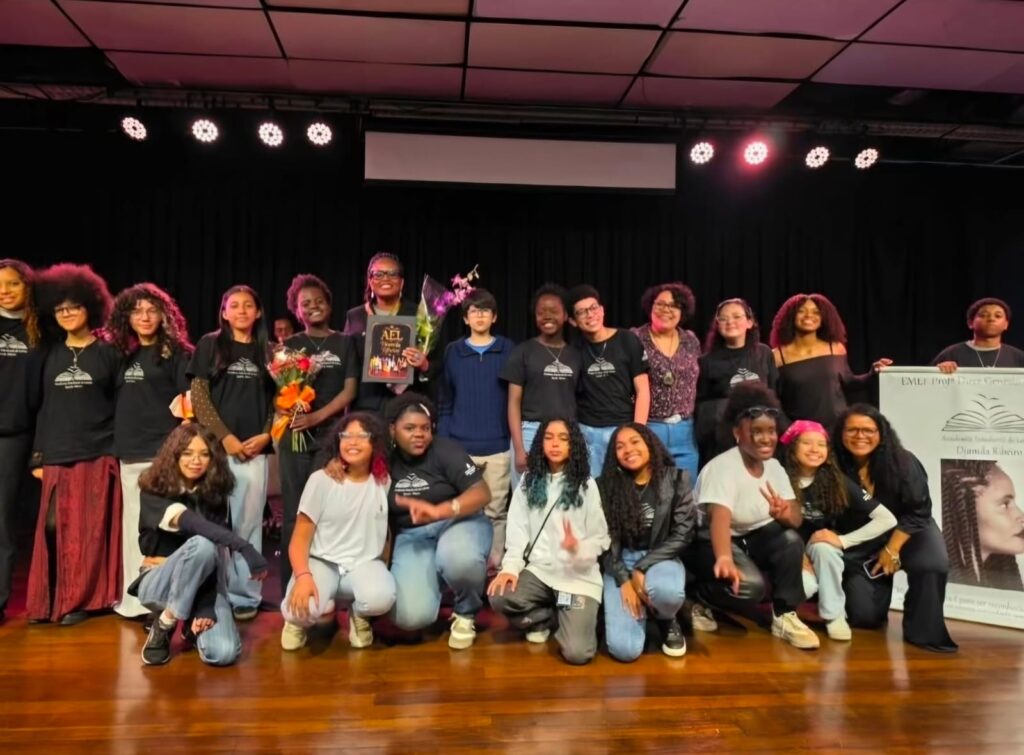
An Unforgettable Evening: Djamila Ribeiro Honored at Gathering with São Paulo Public School Students

Djamila Ribeiro at FLIP 2026: Three Events in Paraty
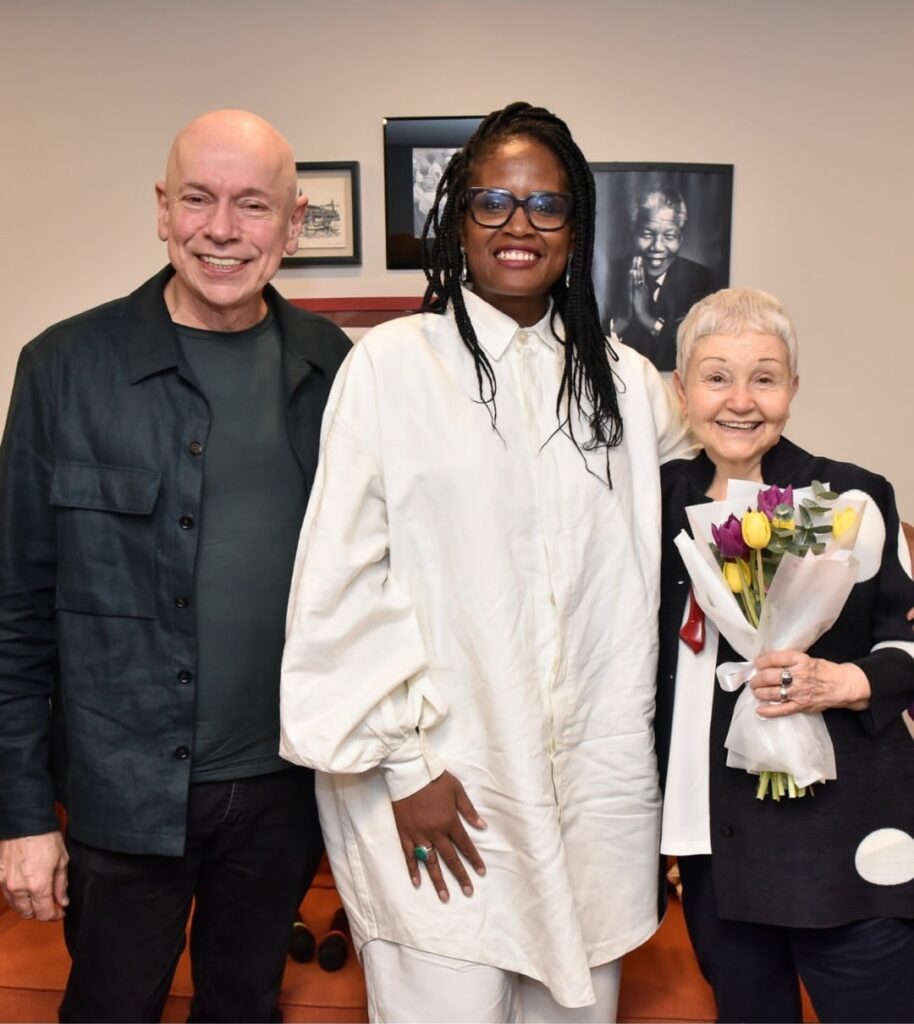
An Evening Celebrating Culture at Espaço Feminismos Plurais