


Djamila Ribeiro Reunites With Grada Kilomba During the Artist’s Stay in São Paulo
September 24, 2026






Acclaimed exhibition O Barco at Sesc Pompeia brings together a 32-meter installation and works on enslavement, colonialism, memory and forced migration
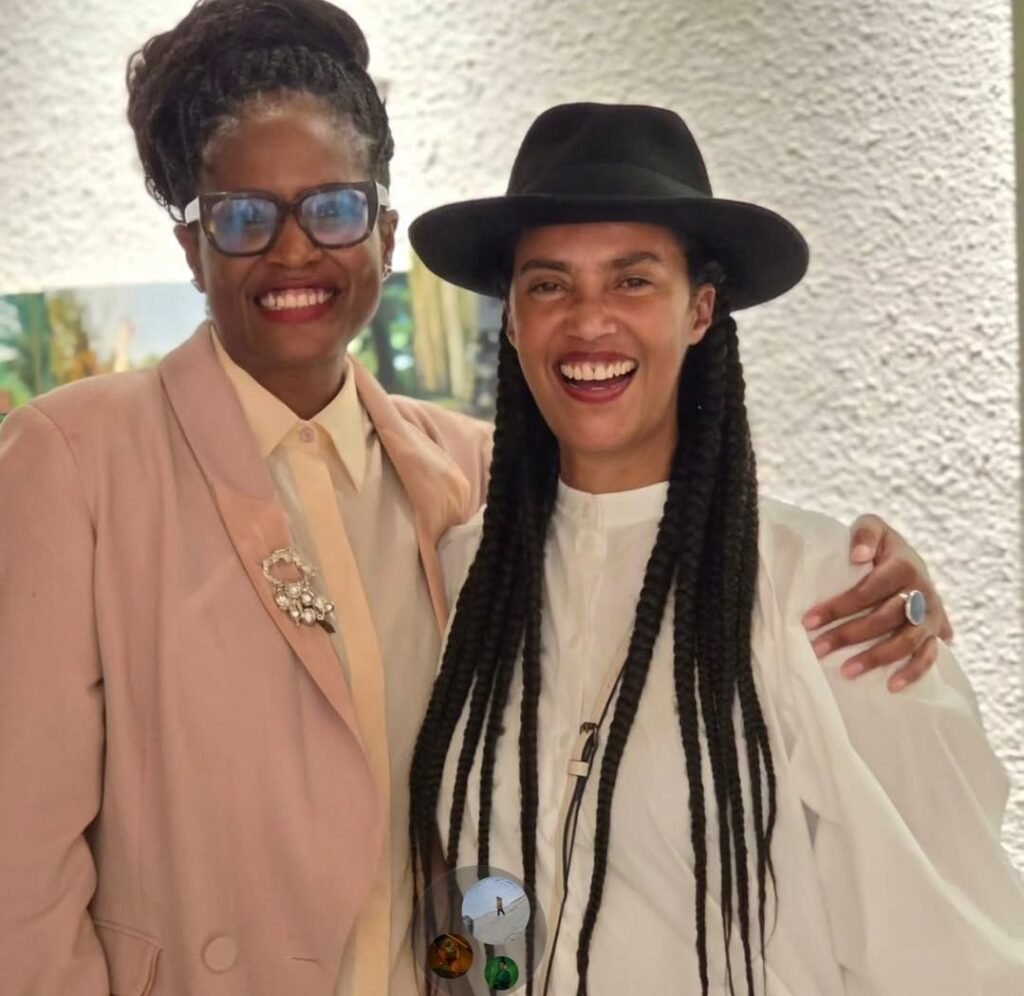
On the eve of the São Paulo opening of O Barco (The Boat), Djamila Ribeiro posted on social media Monday, Sept. 21, about her reunion with the Portuguese artist, writer and theorist Grada Kilomba.
“What a joy to see and hug my beloved Grada Kilomba again. She’s in São Paulo for the opening of her exhibition ‘O Barco’ at Sesc Pompeia,” the philosopher wrote, closing the post with a direct invitation to the public: “Free admission. Go see it, take it in!”
The exhibition opened at 7:30 p.m. Tuesday, Sept. 22, with a public conversation between Kilomba and Júlia Rebouças, artistic director of Instituto Inhotim, the contemporary art museum and botanical garden in Brumadinho, in the state of Minas Gerais. Conceived by Inhotim and produced in partnership with Sesc São Paulo, a nonprofit network of cultural centers, the show fills the Galpão exhibition hall at Sesc Pompeia, the cultural center that architect Lina Bo Bardi designed inside a former factory. It runs through Oct. 25 and marks the work’s first stop outside Inhotim since it arrived in Brazil.
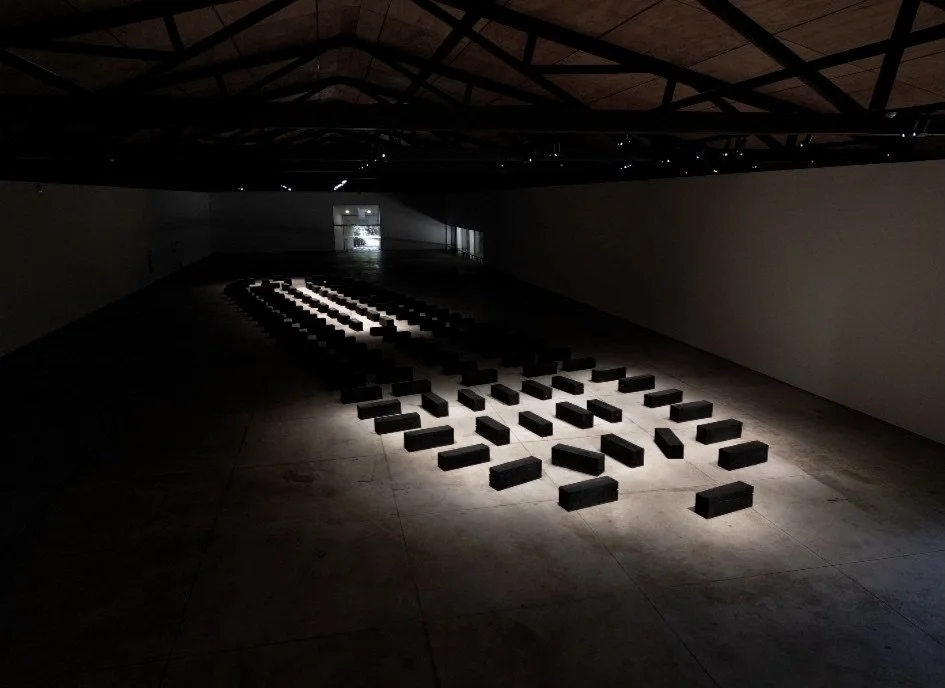
A sculptural and performative work, O Barco consists of 134 charred wood blocks laid out across 220 square meters (about 2,370 square feet) and stretching 32 meters (105 feet). Together, they trace the outline of the bottom of a large ship and expose the architecture of the holds in which millions of enslaved Africans were packed for the Atlantic crossing. On 18 of the blocks, which were ritually burned, the artist engraved in gold a poem of her own, translated into Yoruba, Kimbundu, Cape Verdean Creole, Portuguese, English and Syrian Arabic. Its verses link soul, memory, oblivion and wound.

The work carries particular weight in Brazil, the main destination of the transatlantic slave trade. More than 4.8 million enslaved people were forced across the ocean to labor on Brazilian soil. In March of this year, the U.N. General Assembly recognized the transatlantic slave trade as the gravest crime ever committed against humanity.
For Kilomba, the installation reveals what traveled in the hold of the ships that monuments across Europe and Latin America celebrate as emblems of discovery and expansion.
“This work is the unconscious of our history,” the artist told Agência Brasil, Brazil’s public news agency. She argues that more than four centuries of enslavement have been erased from the collective imagination, scarcely documented and scarcely studied, and that a history poorly told tends to repeat its barbarity.
The work also draws on Antigone, the Greek tragedy in which the heroine defies King Creon’s decree that her brother Polynices be left unburied, a story that asks who has the right to be buried, remembered and mourned. In the artist’s reading, the ocean is a grave for lives lost not only to enslavement and colonialism but also to wars, climate crises and forced migrations that keep casting bodies into the sea.
Because the installation is larger than the Galpão, part of it lies beyond the visitor’s reach, and Kilomba has folded that absence into the meaning of the work: slave ships seldom arrived whole, and neither do many of the boats carrying people fleeing across the seas today.
Commissioned by BoCA – Biennial of Contemporary Arts, O Barco premiered in September 2021 on the banks of the Tagus, on the Praça do Carvão of Lisbon’s Museum of Art, Architecture and Technology (MAAT). In January 2022, it occupied Plaça Margarida Xirgu, in front of Barcelona’s Teatre Lliure, and in October of that year, the courtyard of Somerset House in London.
In Brazil, it opened at Inhotim, where it remained on view for 28 months. There, the project unfolded in three acts: a Portuguese ensemble of choir, percussion and ballet in the first year; 12 artists from Minas Gerais in the second; and, in the third, two works born of the same research, which have now come to São Paulo as well.
In the video installation Opera to a Black Venus (2024), a mythical Black Venus narrates these stories; in Compressed Time (2024), the artist proposes a human archive to hold them and make room for new ones. Marília Loureiro, who co-curates the exhibition with Rebouças, calls Kilomba “one of the most forceful voices of our time.”
About Grada Kilomba
Born in Lisbon in 1968, of Angolan and São Toméan descent, Grada Kilomba trained in clinical psychology and psychoanalysis in the Portuguese capital and went on to earn a doctorate in philosophy from the Free University of Berlin. Her dissertation became Plantation Memories, published in English in 2008 and released in Brazil by the publisher Cobogó as Memórias da Plantação: Episódios de racismo cotidiano. It was the best-selling book at the 2019 Paraty International Literary Festival (Flip).
Her ties to Brazil run deep. She took part in the 32nd Bienal de São Paulo in 2016 with Illusions Vol. I, Narcissus and Echo, had the solo exhibition Desobediências Poéticas (Poetic Disobediences) at the Pinacoteca de São Paulo in 2019, and returned to the Bienal as a co-curator, alongside Diane Lima, Hélio Menezes and Manuel Borja-Villel.
Her bond with Ribeiro runs through that history as well. In 2016, when Kilomba was in São Paulo at the invitation of the Goethe-Institut, Ribeiro interviewed her for the blog of CartaCapital, a Brazilian newsweekly, in a piece later collected in Quem tem medo do feminismo negro? (Who’s Afraid of Black Feminism?). In her preface to the interview, Ribeiro recalls that Kilomba was among the references in her master’s research and that it was moving “to get to know her beyond her work.”
In that conversation, Kilomba summed up a reversal that has proved decisive for antiracist debate:
“I am not discriminated against because I am different; I become different through discrimination.” Confronted with talk of “reverse racism,” she was unequivocal: racism is about power and privilege, which is why it “is a white problem.”
The introduction to the Feminismos Plurais (Plural Feminisms) book collection quotes the passage in which Kilomba describes Plantation Memories as a way of “becoming a subject.” In Lugar de Fala (Place of Speech), Ribeiro takes up Kilomba’s reading of the refusal to listen. In that reading, slavery, colonialism and racism function as secrets kept at a distance from consciousness, and when confronted with them, white subjects tend to claim not to know, not to remember, not to believe.
O Barco moves these secrets out of the unconscious and onto the gallery floor, exposing the hold of the ships that monuments exalt as symbols of glory, and even the part that does not fit in the space stands as a reminder of those who never arrived.
If, as Ribeiro writes, place of speech entails listening on the part of those who have always been authorized to speak, the invitation with which she closes her Instagram post takes on a broader meaning: visiting O Barco is also a way of practicing that listening.
Translated by AI
Related articles

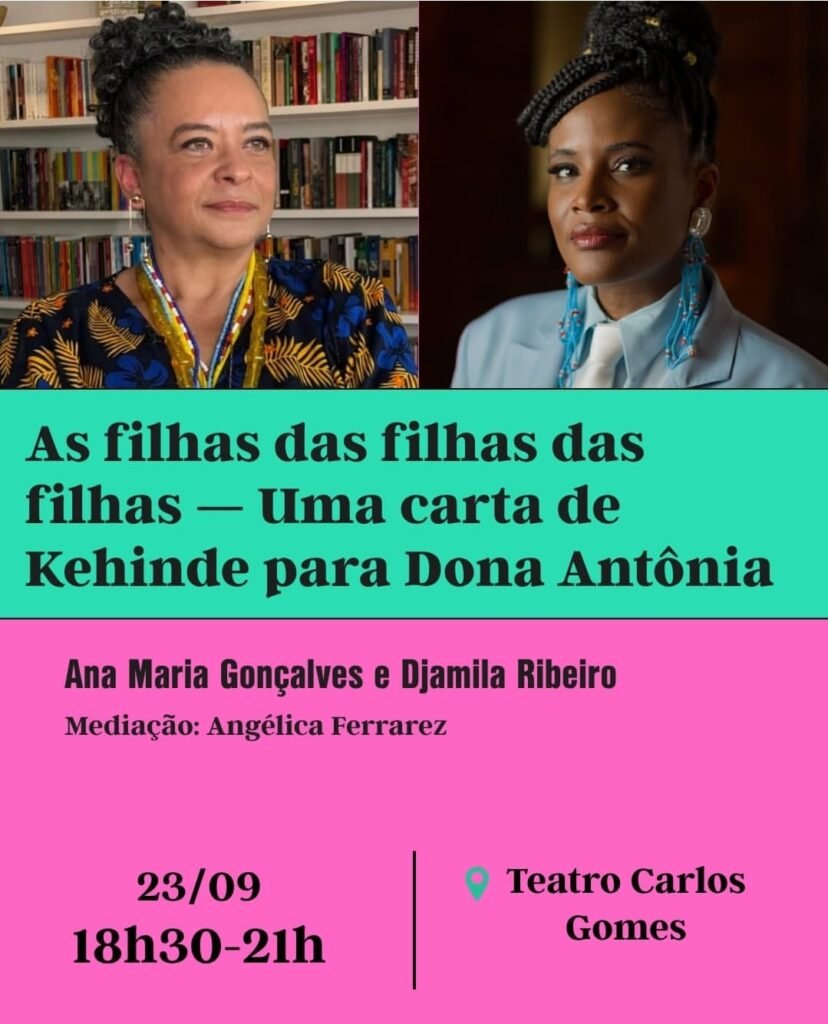
At FLUP 2026, Djamila Ribeiro joins opening program and leads Feminismos Plurais discussion

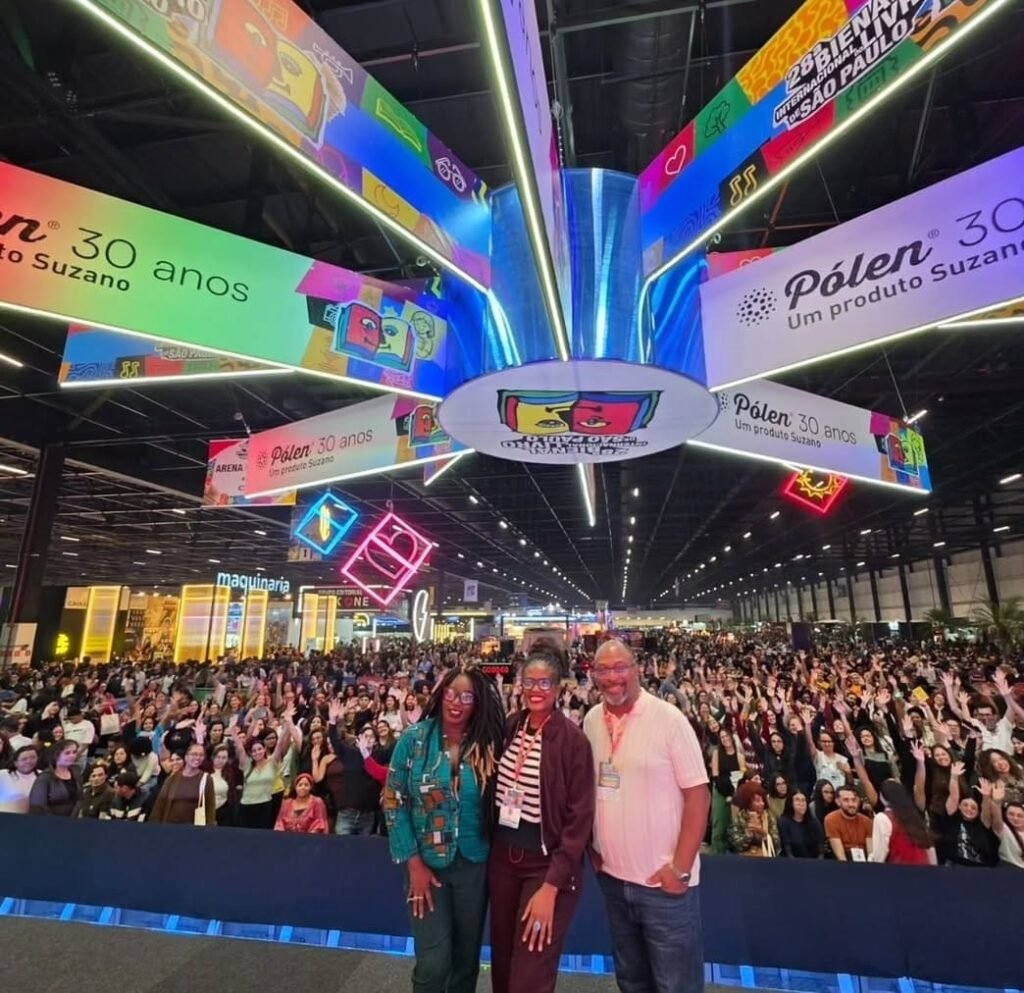
At the São Paulo Book Biennial, Djamila Ribeiro brings together Adilson Moreira and Carla Akotirene for a new phase of Coleção Feminismos Plurais

Djamila Ribeiro marks four years at the Academia Paulista de Letras