



Djamila Ribeiro’s Lugar de Fala course now available on CasaFolha
October 15, 2026




Across nine online lessons, the Brazilian philosopher traces the concept’s origins, introduces the work of Black women thinkers, and addresses misconceptions that have shaped public debate
Djamila Ribeiro presents Lugar de Fala: Filosofia e Prática (Standpoint: Philosophy and Practice), now available on CasaFolha, the educational streaming platform of the Brazilian newspaper Folha de S.Paulo. The course consists of nine prerecorded lessons that subscribers can watch on demand. It explores the philosophical origins of the concept (lugar de fala, often rendered in English as “standpoint” or “speaking place”), introduces the thinkers who helped develop it, and examines how it applies to everyday situations.
The Brazilian philosopher also addresses one of the most persistent misconceptions surrounding the term: the notion that speaking place determines who is allowed to speak and who must remain silent.
“When we study, we have to be intellectually honest,” Ribeiro says in an excerpt from the course highlighted in an article published by Folha on October 15. According to Ribeiro, some criticism of the concept stems from a lack of familiarity with its theoretical foundations, although she acknowledges that people may also repeat mistaken interpretations in good faith.
Throughout the nine lessons, Ribeiro explores the work of Sojourner Truth, Lélia Gonzalez, Angela Davis, bell hooks, Patricia Hill Collins, Sueli Carneiro, Grada Kilomba, and Audre Lorde, among other intellectuals. The course covers Black feminism, intersectionality, identity, identity politics, and silencing, while examining practical examples involving language and journalism.
These themes are central to Lugar de Fala, first published in 2017 and released this year in a revised and expanded edition by Rosa dos Tempos. Published in English as Where We Stand, the book explains how speaking place relates to the positions different groups occupy within social power structures. Rather than reducing knowledge to individual experience, the concept examines how structural inequalities determine whose voices are heard and whose knowledge is recognized.
In this context, Ribeiro explains in the course that “speaking place is precisely about fostering a multiplicity of debates.” The aim is to broaden the range of perspectives represented in public discussion while challenging the assumption that any particular group can speak for humanity as a whole.
The Lugar de Fala course on CasaFolha is part of the platform’s catalog of 41 courses covering a range of fields. Lessons are available on demand, and participants can receive a digital certificate upon completion. Access requires a subscription, with an upgrade option available to existing Folha de S.Paulo subscribers.
Access Djamila Ribeiro’s course on CasaFolha.
Translated by AI
Related articles


Djamila Ribeiro Says She Will Vote for Lula, Defends the Role of Criticism in Political Life
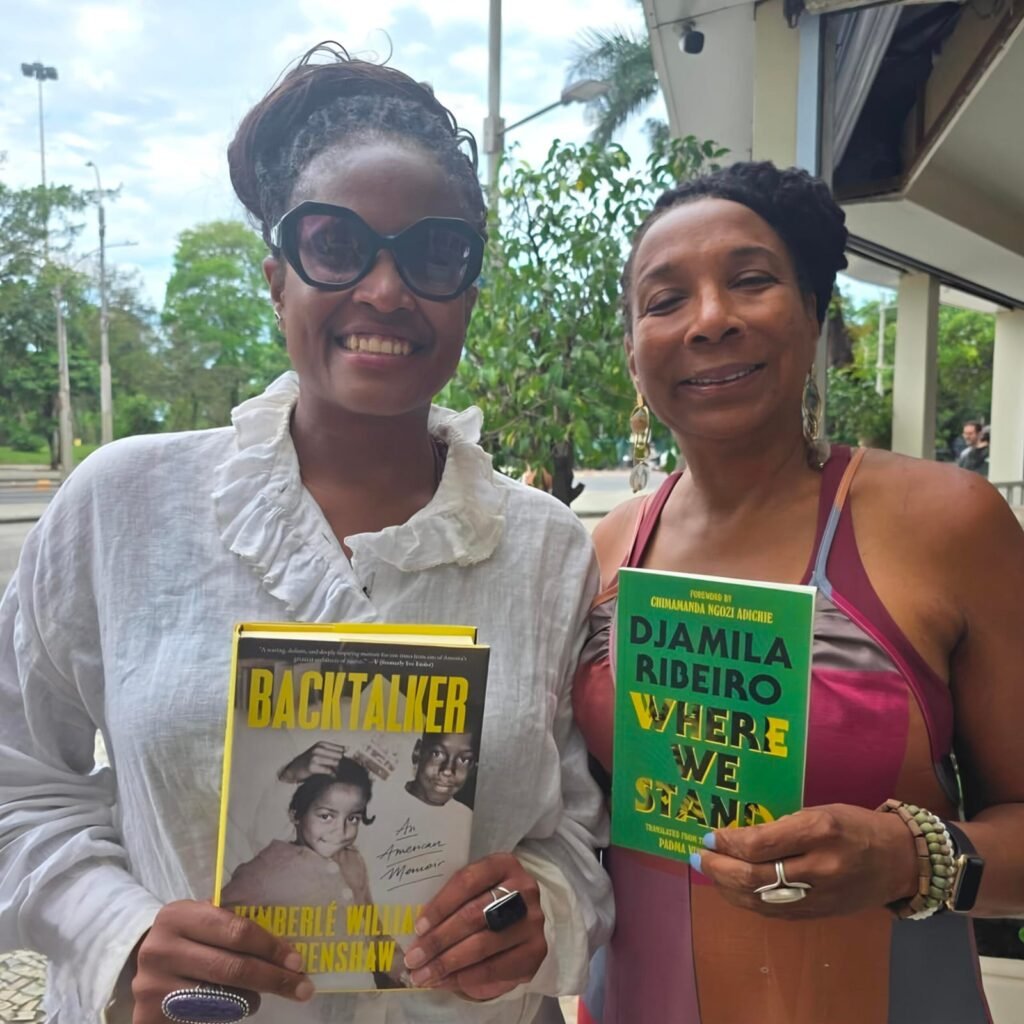
In Rio, Djamila Ribeiro Presents Kimberlé Crenshaw with English Edition of ‘Lugar de Fala’


September Marked Farewells to Two Influential Figures in Djamila Ribeiro’s Life