


In Rio, Djamila Ribeiro Presents Kimberlé Crenshaw with English Edition of ‘Lugar de Fala’
October 1, 2026




Crenshaw, who coined the term intersectionality, was a guest at a Rio de Janeiro literary festival where Djamila took part in two panels
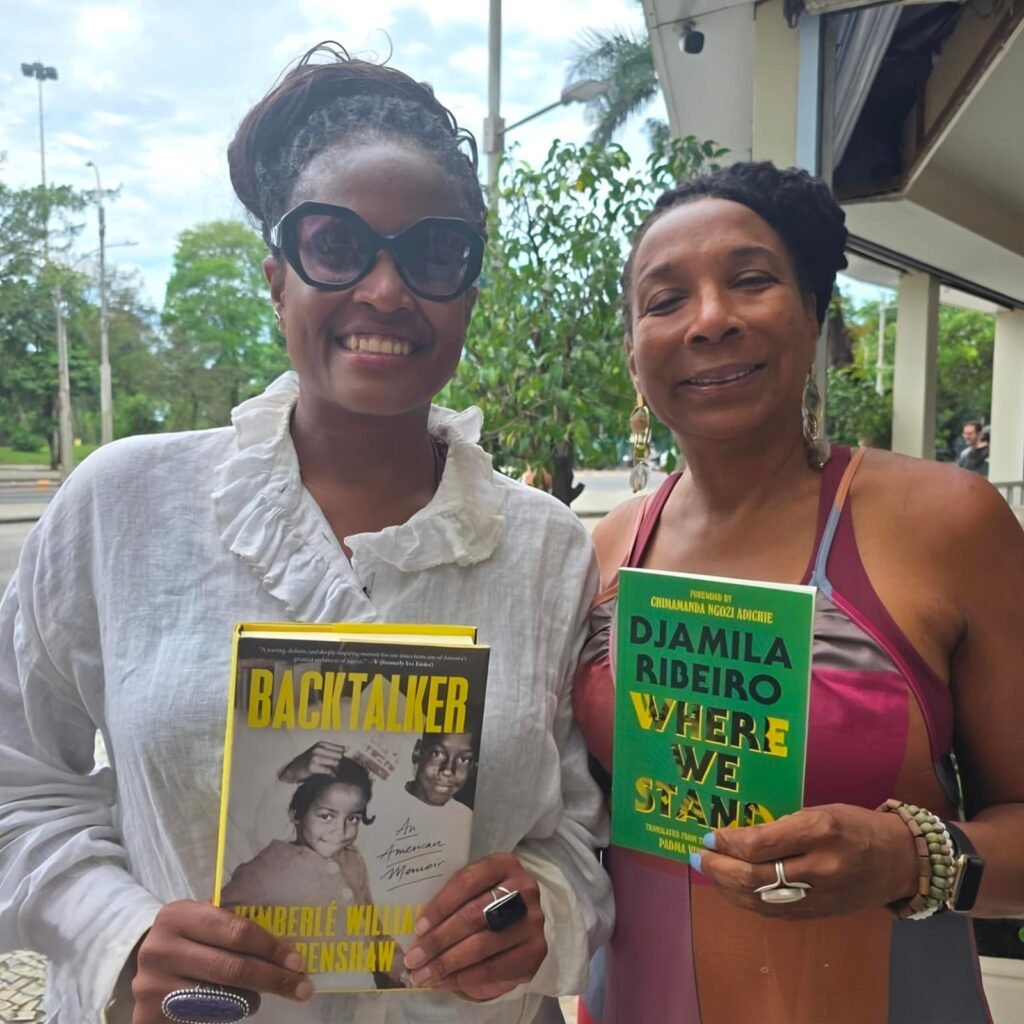
Djamila Ribeiro had lunch in Rio de Janeiro with Kimberlé Crenshaw, the American legal scholar who coined the term intersectionality, during the Festa Literária das Periferias (FLUP, Literary Festival of the Peripheries).
She gave Crenshaw a copy of Where We Stand, the English edition of Lugar de Fala (Place of Speech), and had her own copy of Backtalker: An American Memoir, Crenshaw’s autobiography, signed by the author. Djamila wrote about the encounter on Instagram:
“Crenshaw’s work has been with me for decades, and it was very special to have this more intimate moment with her and get her autograph in her autobiography, Backtalker: An American Memoir, which I bought during my time at MIT.”
Published by Simon & Schuster in May 2026, Backtalker traces Crenshaw’s life from her childhood in Canton, Ohio, in the 1960s through her academic career, including her work with Anita Hill’s legal team and the #SayHerName campaign, which drew attention to Black women killed by police violence. Crenshaw is a law professor at UCLA and Columbia University and one of the founders of critical race theory.
The concept of intersectionality runs throughout Djamila’s writing. In Quem Tem Medo do Feminismo Negro? (Who Is Afraid of Black Feminism?), she places Crenshaw’s 1989 formulation of the concept within a tradition that includes thinkers such as Angela Davis, who had already addressed structural forms of oppression as inseparable from one another. In Lugar de Fala, Djamila draws on the concept to reject hierarchies of oppression, explaining that race, class, and gender cannot be understood in isolation.
In her post, she wrote that meeting Crenshaw in person only deepened an admiration she has felt for years:
“It’s so good to meet the people we look up to. Kimberlé is so upbeat and fun, and meeting her in person only deepened the admiration I’ve had for her for so long.”
The 16th edition of FLUP was held from September 23 to 27 in downtown Rio de Janeiro. This year’s theme, “As Filhas das Filhas das Filhas” (“The Daughters of the Daughters of the Daughters”), prompted discussions of legacies passed down across generations and of the production of knowledge by Black women. The festival honored Ana Maria Gonçalves, the first Black woman elected to the Academia Brasileira de Letras (Brazilian Academy of Letters).
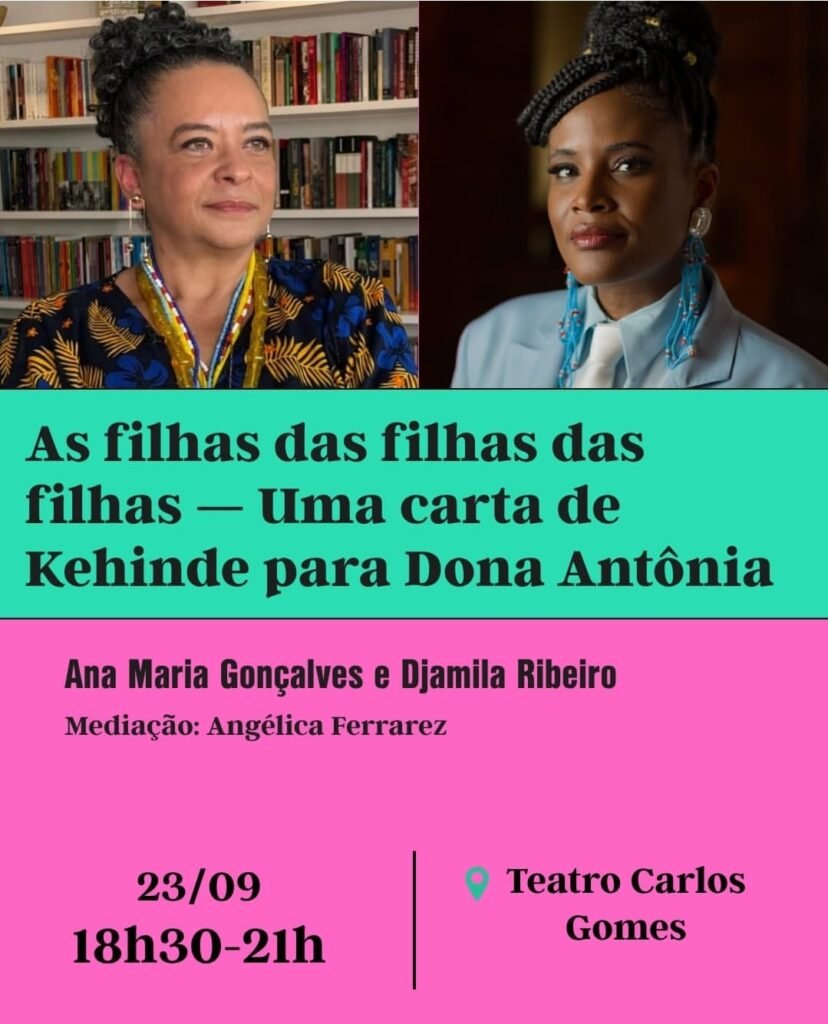
Djamila’s first appearance at the festival was on Wednesday, September 23, at the Teatro Carlos Gomes, alongside Gonçalves, in the panel “As filhas das filhas das filhas: Uma carta de Kehinde para Dona Antônia” (“The Daughters of the Daughters of the Daughters: A Letter from Kehinde to Dona Antônia”), moderated by historian Angélica Ferrarez. The conversation put in dialogue Djamila’s grandmother, Dona Antônia, the recipient of the letters in Cartas para minha avó (Letters to My Grandmother), and Kehinde, the protagonist of Gonçalves’s novel Um defeito de cor (A Defect of Color).
On Friday, September 25, Djamila moderated the panel “Coleção Feminismos Plurais, uma kizomba do pensamento: poder, amor e fé” (“Plural Feminisms Collection, a Kizomba of Thought: Power, Love, and Faith”) at the Salão Guarani. Kizomba is a word of Bantu origin for a gathering or celebration. The panelists were Adilson Moreira, Carla Akotirene, and Sidnei Nogueira, authors of Racismo recreativo (Recreational Racism), Interseccionalidade (Intersectionality), and Intolerância religiosa (Religious Intolerance), respectively, all titles in the collection that Djamila coordinates. The panel took place as the collection entered a new publishing phase with Rosa dos Tempos, an imprint of Grupo Editorial Record (Record Publishing Group).
On Saturday, September 26, at 4 p.m., Crenshaw took part in a conversation with Ana Maria Gonçalves and Jurema Werneck at the Teatro Carlos Gomes.
Translated by AI
Ver esse post no Instagram
Related articles
September Marked Farewells to Two Influential Figures in Djamila Ribeiro’s Life
Djamila Ribeiro Reunites With Grada Kilomba During the Artist’s Stay in São Paulo
At FLUP 2026, Djamila Ribeiro joins opening program and leads Feminismos Plurais discussion