


The rise of Black athletes and women in sports does not undo their subordination to the structure
July 4, 2026




Text originally published in Folha de S.Paulo
I remember reading, back in 2006, this newspaper’s story about Forty Million Dollar Slaves, a book by William C. Rhoden, the American sociologist, former basketball player, and commentator. In it, he examines the condition of Black athletes in American sports, particularly basketball.
An approach like that was rare in the press at the time. I was working as a secretary at a company at the port of Santos; I had put journalism school on hold and dreamed of going back to university, and I found that article inspiring.
Guilherme Roseguini’s story laid out Rhoden’s central thesis. Looking at American professional sports, the sociologist argued that they had perfected the logic of the plantation: Black athletes were celebrated on the court and on the field, while the jobs of coaches, executives, club owners, and the people shaping sports policy remained — and still remain — in white hands. The pay had changed; the plantation logic had not.
However great the differences between American and Brazilian professional sports — in economic power, infrastructure, advertising — the racial distribution of power looks much the same.
Here, too, the horizon for Black athletes tends to end with their playing careers. In Brazilian football, as Donald Verônico shows in his doctoral dissertation, the intellectual roles — technical coordination, sporting directorships, boardroom power — remain reserved almost entirely for white professionals, while Black athletes are expected to play, entertain and, once their careers are over, vanish from the rooms where decisions are made.
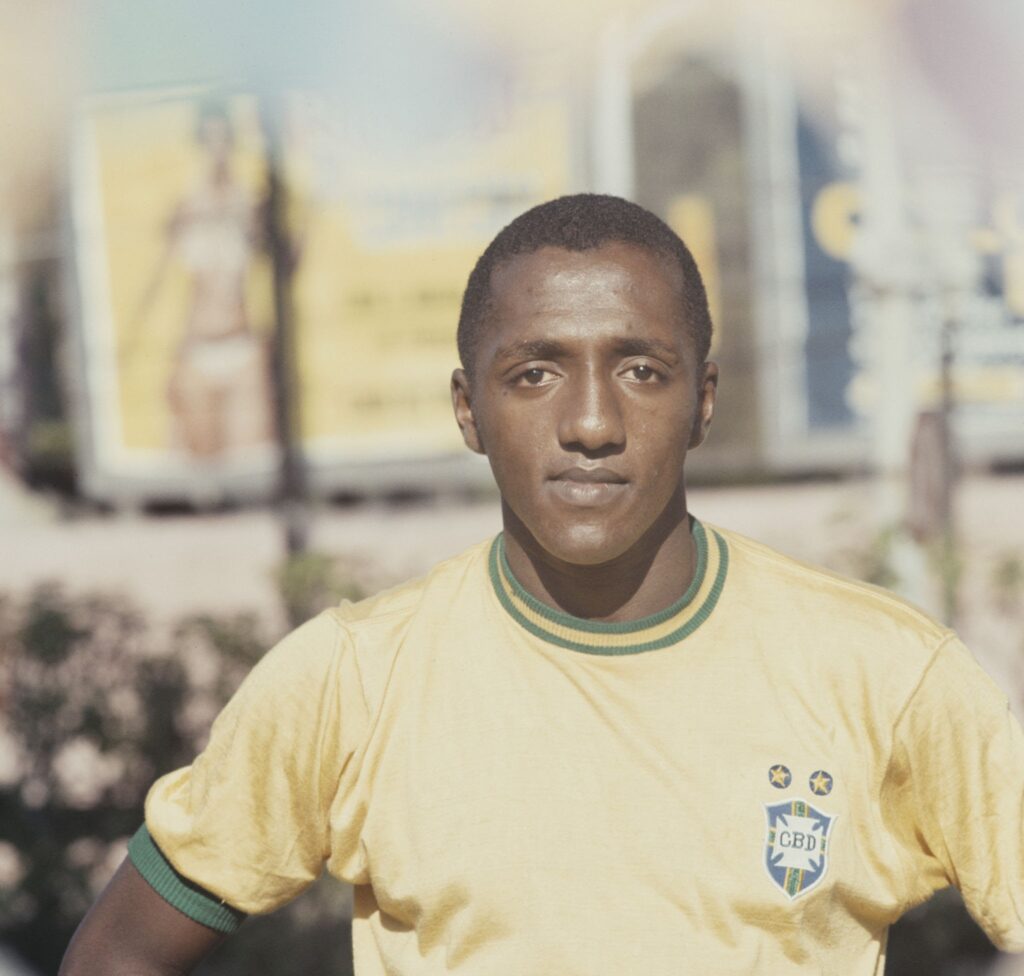
Might the commentator’s chair be an exception for retired players? If so, Paulo Cézar Caju comes to mind as the most emblematic case. A three-time World Cup winner and a “chevalier” proud of his Blackness, he became a commentator, a provocateur, and one of the few Black voices willing to challenge the received wisdom of Brazilian football.
More recently, former players such as Denílson and Grafite — along with the still-active Richarlison — have carved out space in the media outlets that hold broadcasting rights. But who runs those channels? Who owns the companies?
Even if we grant that Black men are better represented in the sports press, it is too early to say that the content of the commentary has changed. As Professor Adilson Moreira observes, recreational racism enlists the commentator to legitimize racially hostile jokes and disparaging assessments of Blackness.
It is one of the strategies that lets broadcasters reproduce racism without looking racist. Allowing for the differences, the same reasoning applies to recreational sexism and to the way women are portrayed in a sexist society.
It’s worth noting Rhoden’s insight that the economic rise of Black athletes does not undo their intellectual and political subordination to the white structure. Twenty years on, his hypothesis can be taken further.
The tradition of Black feminism teaches us that this structure is not only white; it is also patriarchal. The logic Rhoden described goes beyond the racial distribution of power in sports and reaches the distribution of power between men and women.
That difference complicates the analysis. If Black athletes face enormous obstacles to reaching positions of leadership, command, and policymaking, women in sports start from an even more unequal position.
With the exception of tennis, they earn far less, even at elite clubs and in top divisions — a deep pay gap that has been normalized and remains largely unchallenged.
If elite athletes — Black athletes above all — could be described by Rhoden as “forty-million-dollar slaves,” only a tiny number of women will earn, over an entire career, a fraction of that figure. Black women, in turn, remain even further removed from opportunities that are already scarce for women as a whole.
The obstacles do not end with retirement. We have a man coaching the women’s national football team, yet a woman coaching the men’s side is unthinkable — as it is at top-flight clubs.
In the federations, women executives have been a rarity throughout history, and I cannot recall a single one who was a former player. Why is that? Is it that women really don’t understand football — or is the logic of disposability Rhoden described even more merciless where they are concerned?
Faced with this reality, my next column will stay with this theme, turning to public policy for Brazilian sports. See you then!
Paulo Cézar Caju. Photo: Getty Images
Translated by AI
Related articles

New edition of ‘Lugar de fala’ enters the Nielsen-PublishNews Bestsellers List
Djamila Ribeiro launches Rio de Janeiro leg of the expanded Lugar de Fala book tour
Djamila Ribeiro is named SaLiPi ambassador in an edition attended by more than 300,000 people